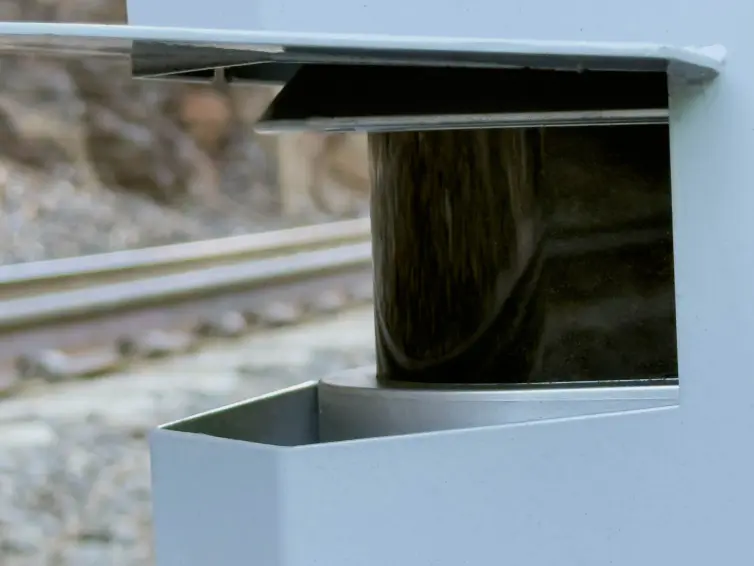
Falling Object Detection is an advanced track obstacle detection system designed to protect high-speed and conventional rail corridors from objects dropped or dislodged from bridges and overpasses.
Bridge and Overpass Track Obstacle Detection
By directly monitoring the track under structures and immediately alerting operators, the system helps prevent collisions, reduce unnecessary slow orders, and accelerate return-to-service decisions with verified information.
How Does Falling Object Detection Work?
Falling Object Detection uses direct track monitoring to determine whether an object is present within the operationally critical clearance zone under bridges and overpasses. The system is designed to support multiple operational workflows, from automatic alarm outputs to operator verification, without relying on indirect "trip-only" mechanisms.
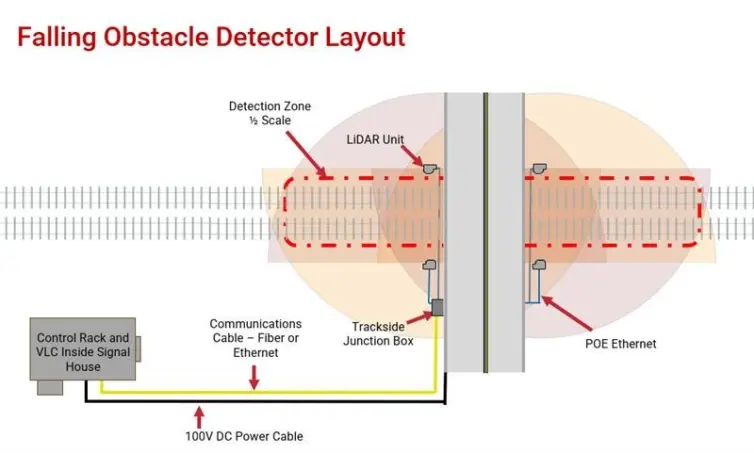
Core principle: detect what matters operationally - an obstacle on or near the rail that can endanger train movement, then provide actionable outputs.
Typical workflow
Continuous monitoring under/near the structure to detect objects that encroach into the defined hazard zone.
Immediate local alarm generation via relay output when an obstacle is detected.
Web alert with notification to need to know party to follow, including visual confirmation via integrated camera views to support operator decision-making.
Event logging and reporting to support post-event analysis, reliability tracking, and maintenance planning.
Key Features and Benefits
Direct Track Monitoring Where the Risk is Highest
Bridge and overpass locations concentrate risk: even a small object can become a high-energy hazard at speed. Falling Object Detection is purpose-built to monitor these hotspots and confirm whether the track is obstructed. Where the hazard originates from slopes and cuttings rather than structures, Rockfall Monitoring provides equivalent trackside protection against falling rock and debris.
Faster, More Confident Operational Decisions
Immediate notification of potential obstruction events
Visual verification using integrated camera systems to support decision-making and reduce unnecessary extended restrictions
Actionable event details (timestamped alarms, unit identification, configurable event fields) to support operations and incident response
Reduced Disruption from "Unknown Condition" Events
Instead of defaulting to prolonged slow orders or repeated site visits, operators can use validated alarms and visual evidence to triage response:
Dispatch only when there is evidence of an obstacle
Clear the location faster when conditions are verified
Integration-Ready for Railway Control Environments
Falling Object Detection is designed as a subsystem that fits into rail operating rules and control architectures:
Relay outputs for simplified signal/control integration
Interfaces for central monitoring and alarm distribution (control center and maintenance notifications)
Designed for robust communications and operational resilience
Built for Harsh Wayside Environments
Ruggedized trackside equipment for weather, vibration, and debris exposure
Reliable DC power architecture with straightforward battery backup options
Ordering and More Information
Learn more about this product, complete our short contact form to connect with our expert team.
Contact L.B. Foster Regional Representatives